



Every single day, reports of drug deaths all around America plague the news. Many of these deaths are accidental have been caused by an opioid called fentanyl. Fentanyl is an artificially made painkiller that is up to a hundred times more potent than morphine. This means that it is definitely much, much stronger than Oxy or heroin. It makes it easier to transport because it’s less bulky as you’re getting a strong drug for less the amount.
Aside from its incredible strength, what makes it so attractive for drug dealers is that it’s also cheaper. This resulted in fentanyl being mixed with different drugs like heroin, fake Xanax, fake Valium, and other drugs. Drugs being sold on social media platforms are also notorious for having fentanyl. Fentanyl has also become a popular choice to create dangerous drug cocktails like the fentanyl speedball, which is a combination of cocaine and fentanyl.
With so many overdose deaths being caused by this infamous substance, many media reports and experts weighed in on just how dangerous this drug is. Reportedly, drug enforcers had to wear a protective suit in a fentanyl drug because accidentally being exposed to it could be fatal. There have also been claims by police officers and first responders feeling ill effects while being in the vicinity of fentanyl. So, are these claims actually valid? Can you die just from touching fentanyl?
Fentanyl’s Touch of Death: Truth or Myth?
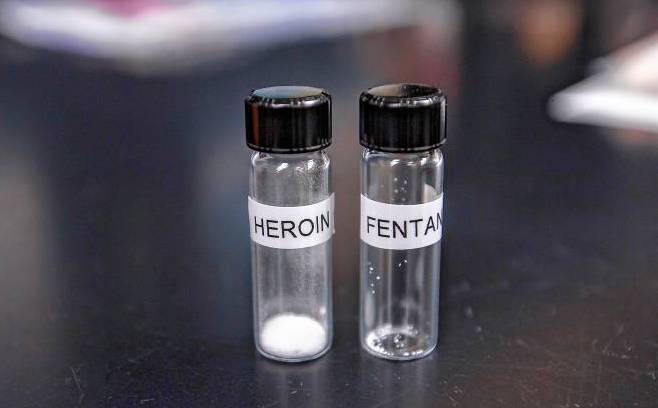 It is undebatable that fentanyl is dangerously deadly. Taking the drug whether intentionally or accidentally can result in respiratory and heart failure, coma, and even death. But how about for people who are not ingesting the substance? Is fentanyl dangerous if it only comes into contact with your skin? This is an important issue because emergency responders and even civilians may hesitate in lending help to overdose drug victims if they think that they are putting themselves at risk.
According to experts, fentanyl is only dangerous if it was actually ingested either by injecting it into the bloodstream, snorting it, or taking it in pill form. According to a position statement released in 2017 by the American College of Medical Toxicology, if a person experiences small, unintentional skin exposure to fentanyl tablets or powder, it is very unlikely that this can result in significant opioid toxicity. Additionally, if in case toxicity were to occur, it will not be rapid which means this will allow the person time to remove the substance.
A statement from emergency room physician and Harvard Medical School instructor Jeremy Faust also maintains that fentanyl is not a substance that is easily absorbed through the skin. Faust has treated many fentanyl victims in the ER and according to him, while there is a fentanyl patch where the substance is delivered and absorbed through the skin, it took many years and millions of dollars for pharma companies to develop that technology. They wouldn’t have bothered if this was possible just by mere accidental contact.
How about accidental inhalation of fentanyl? Experts maintained that since fentanyl is an opioid, it does not naturally become airborne so even unintentionally inhaling it is difficult unless you are in a place with tons of fentanyl powder while the wind is aggressively blowing towards you.
Medical toxicologists Jeanmarie Perrone and Lewis Nelson said in a 2018 STAT article that passive toxicity makes less sense in a conventional drug-use setting, where other people were present but were unaffected. They also noted that during a 2002 rescue incident, the rescuers were wearing limited or no protective gear but were not affected by the opioids.
Is it really possible to die from touching fentanyl?
 While many experts and medical toxicologists have debunked the possibility of dying from accidental skin contact with fentanyl, news reports of cops being ill are still surfacing. So, are these people making the stories up? While doctors say that it is impossible to be affected with accidental fentanyl exposure, there may be a different reason why they started feeling ill.
One possibility is that they are having panic attacks. If police officers have been told that fentanyl is highly dangerous, just being in the vicinity of the substance could cause unnecessary fear and panic. Imagine that you’re told that touching a certain powder will kill you and you see that powder on your skin, it is quite normal to feel panic, too. This may be the reason why some have experienced rapid breathing, trembling, and hot flashes, instead of the slowed breathing and loss of consciousness opioid overdose victims typically experience.
Another possibility, which is the most plausible route of unintended exposure, is if someone who touched fentanyl on their hands suddenly rubs their eyes, nose, or mouth so the substance is absorbed by the mucous membranes. This is the reason why first responders and drug enforces wear gloves, safety masks, and eye gear to prevent this possibility.
To recap:
- It is not possible for you to die from fentanyl just by momentarily touching a tablet or powder.
- If you touch fentanyl with your hands AND then you touch your eyes, nose, or mouth, you can possibly ingest fentanyl accidentally. If the amount or dose is high, this could lead to overdose and death.
- It is also unlikely that you can accidentally inhale the fentanyl powder because it does not naturally become airborne.
- The only remote possibility of really inhaling it accidentally is if you are surrounded with a massive amount of powder with the wind blowing at high velocity.
If you or a loved one is struggling with substance abuse, help is available today. Contact Lighthouse Treatment Center to learn more about our specialized modes of treatment.































