


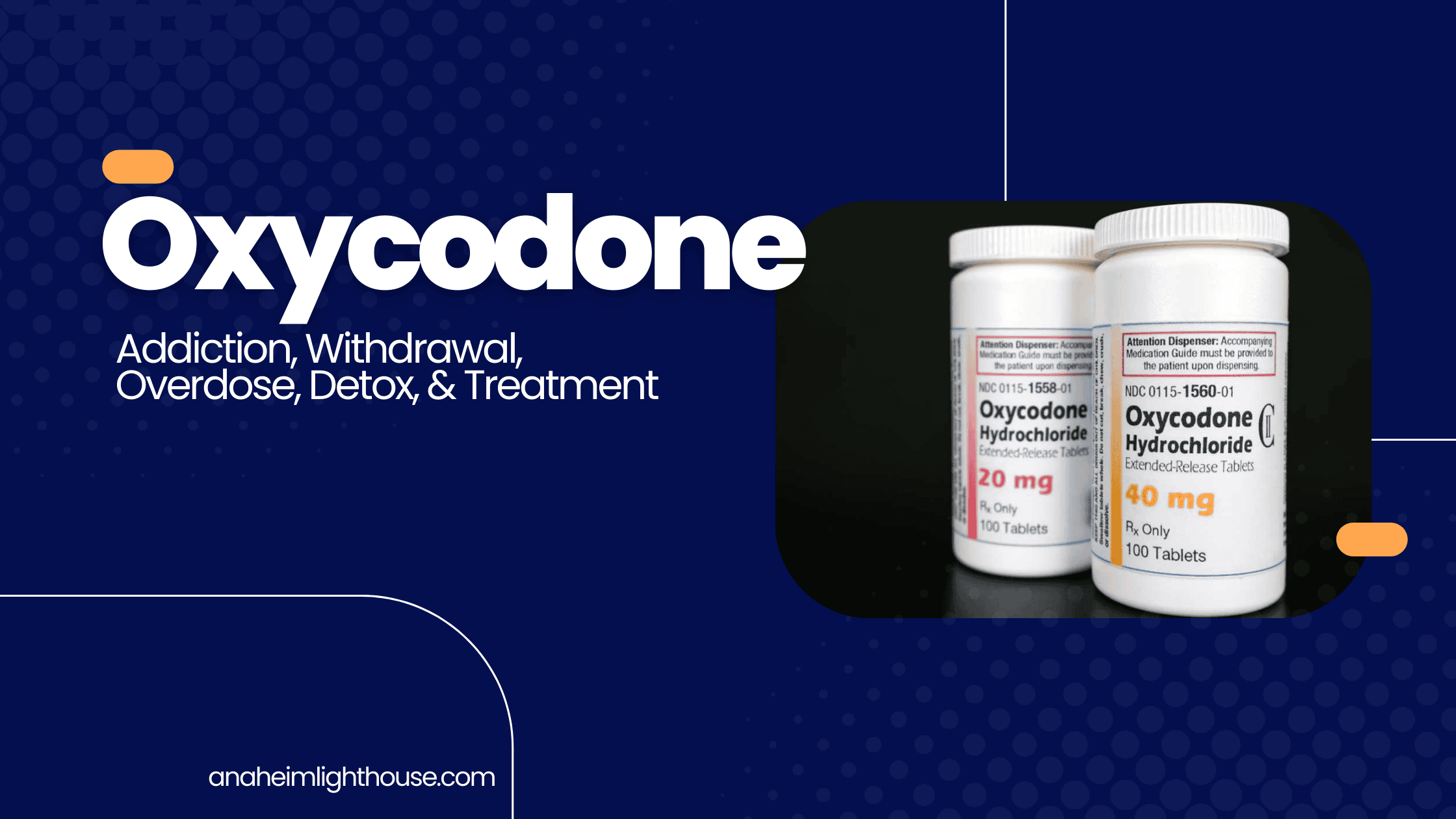
When it comes to pain relief medications, oxycodone is one of the most popular options. But what else do you know about oxycodone? If you’re like most people, you probably only know that it’s a powerful painkiller. But there’s a lot more to this drug than that.
Oxycodone can be addictive and lead to dangerous overdoses. In this post, we’ll discuss what it is, its effects on the body, addiction and withdrawal symptoms, overdose risks, and detox and treatment options.
We hope this information will help you understand this drug better and make informed decisions about using this medication.
What Is Oxycodone?
Oxycodone is a pain reliever drug under the opioid class. Like the other opioids, the drug attaches to the pain receptors in the brain to change the way the body perceives pain.
This medication is known by its generic, brand, and street names. It has a generic name of Oxycodone while its brand names are Targin, OxyContin, Oxynorm, Endone, and Proladone.
Meanwhile, the street names used for this drug are 80, 40, Oxycotton, OX, Oxy, OC, Blues, Kickers, and Hillbilly heroin.
This drug is available in both immediate-release and extended-release formulations. The extended-release formulation is designed for around-the-clock treatment of moderate to severe pain.
What Does Oxycodone Look Like?
This drug is sold in tablet and liquid forms on the market. The tablet comes in various colors, shapes, and pill imprints. The 5-milligram tablet has a round shape with white and orange colors.
The white tablet has pill imprints of “48 10, V” and “K 18” while the orange one is “N P, 11”.
For the 10 milligram tablet, it has a round shape, pink color, with a pill imprint of “K 56”.
For the 15 milligram tablet, it is light green, and round in shape, with pill imprints of “M, 15”, “A 214”, “48 11, V”, “ K 8”, “U23”, and “187”. It also has a yellow color round tablet with a pill imprint of “N P,13”.
The 20-milligram table has a round shape, gray color, with a pill imprint of “K 57”. While the 30-milligram tablet has a color of light blue to blue, round in shape, and with pill imprints of “M, 30”, “A 215”, “V, 48 12”, “K 9”, “U24”, “ALG 265”, and “A 51”.
The liquid form of this drug is of 5-milligram strength.
What Is Oxycodone Used For?
This drug helps with severe pain. It’s used to treat conditions like surgeries and serious injuries. Doctors also prescribe this opioid for cancer pain and pain from other chronic conditions.
It can also help treat other types of long-standing discomfort when weaker medications don’t work. If medications like ibuprofen, aspirin, or paracetamol do not relieve the pain, then a healthcare provider may prescribe this drug.
How Does Oxycodone Work?
This medication works in the same way as the other drugs under the opioid class. Once orally ingested, it mixes in the blood and targets the brain. It specifically attaches itself to the opioid receptor sites where it prevents the brain from interpreting the painful sensations all over the body.
Aside from that, it further reinforces its pain relief action by stimulating the secretion of dopamine in the brain. Dopamine is a brain chemical and hormone which is responsible for any individual to feel happy or high. Consequently, this euphoric feeling further cloaks the brain from feeling any painful sensation.
How Long Does Oxycodone Stay in Your System?
In general, this drug has a half-life of 4.5 hours which means if one takes a 30 mg tablet, this amount becomes 15 milligrams inside the body after 4.5 hours after the time it was taken.
In the blood, a drug test can detect the drug one day after the last intake. In the urine, it can remain for 1 to 4 days.
In the saliva, the drug remains for three to four days after it was last taken. Lastly, in the hair follicle, a drug test may still detect it up to ninety days after the last use.
What are the Short and Long-term Effects of Oxycodone?
Once a person starts taking this drug, they may feel certain side effects. These side effects are similar to the side effects of other opioid substances. The side effects may get worse as time goes on and the person takes more of the drug.
The short-term side effects of taking this drug can include disorientation, euphoria, nausea, constipation, and slower breathing. Some of these side effects can be relieved by taking certain measures. For example, constipation can be relieved by eating more fiber or drinking juices that are high in natural fibers.
Meanwhile, the serious long-term side effects of this drug include suicidal behavior, intense mood shifts, loss of muscle strength, respiratory and kidney failure, seizures, hallucinations, and death.
Is Oxycodone Addictive?
Yes, Oxy is addictive. It is a Schedule IV controlled substance. This signifies a lower potential for abuse and addiction. However, this does not mean that it cannot be addictive.
Anyone who takes Oxy should be aware of the risk of addiction and should take it only as prescribed by a doctor.
Recent findings show that Oxy addiction is a growing problem in the U.S.. The number of people who abuse this drug has increased in recent years, and the number of people who die from oxycodone overdoses has also increased.
What’s more alarming is how people with legitimate opioid prescriptions can easily become addicted to this drug. Many people who start taking oxycodone for pain relief eventually develop an addiction to the drug.

What Are the Withdrawal Symptoms?
Withdrawal from opioids like Oxy can be unpleasant and even dangerous. The symptoms of Oxy withdrawal can include:
- Anxiety
- Agitation
- Muscle aches
- Insomnia
- Sweating
- Abdominal cramping
- Diarrhea
- Nausea and vomiting
What Causes Oxycodone Overdose?
An oxycodone overdose can be caused by taking a large dose of the drug, or by mixing it with other drugs or alcohol.
Chronic pain patients who take this drug regularly are at risk of overdose if they have developed tolerance to the drug. Tolerance occurs when the body becomes used to a certain dose of a drug and needs more of the drug to achieve the same effect.
Oxy users who mix the drug with other substances, such as alcohol, are also at a higher risk of overdosing.
Symptoms of an Oxy overdose include:
- slow and shallow breathing
- muscle weakness
- cold and clammy skin
- loss of consciousness
How Do You Treat Oxycodone Overdose?
If you think someone has overdosed on Oxy, it’s important to seek emergency medical care immediately. Because Oxy is a powerful opioid, an overdose can be life-threatening.
One of the most effective treatments for an overdose is naloxone. Naloxone is a medication that reverses the effects of opioids, and it can be administered either by injection or as a nasal spray.
If someone has overdosed on Oxy, getting them to a hospital where they can receive emergency care and naloxone treatment is critical.

How Do You Treat Oxycodone Addiction? Detox & Treatment
If you are seeking treatment for Oxy addiction, it is important to seek professional help. This type of addiction can be dangerous and potentially life-threatening, so it is best to seek care from a qualified drug detox and treatment facility.
Professional detox will help you rid your body of the Oxy toxins, and inpatient addiction treatment will provide you with the necessary counseling and support to overcome your addiction.
Final Thoughts: Addressing Oxycodone Abuse and Addiction
Oxycodone is an opioid pain medication that is often prescribed for chronic pain. The drug can be effective in managing pain, but it is also associated with a high risk of abuse and addiction.
If you are struggling with Oxy addiction, there is hope for recovery. With the right care and support, you can overcome your addiction and rebuild your life.































